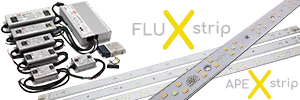
LED modules can only light up if the necessary power is supplied to them. This also applies to our FLUXengine and APEXengine LED Boards. On this page we explain the basics of LED drivers and show what you should consider when choosing a LED driver. This page is especially for our FLUXengine DIY LED modules, but the basics apply to all LED applications.
Basically, any power supply unit can be used as a power supply for LEDs - provided that the parameters are correct! However, special ballasts for LEDs, also called LED drivers or constant current sources, are better. These ensure that a constant current is driven through the LEDs regardless of the forward voltage of the LED. They thus enable safe and flicker-free operation even with fluctuations in the mains voltage.
A tool for the planning of plant lamps.
Crescience Grow LED Wizard
We recommend Mean Well LED drivers for our FLUXengines and APEXengines. Since 1982 the Taiwanese manufacturer stands for an excellent price-performance ratio and reliable products in the field of power supply.
The correct LED driver can be found by using the Select a model with the appropriate specifications according to the data sheet.
For constant current sources for LEDs the series HLG and XLG, as well as ELG are especially recommended. In our kits we mostly use the new XLG power supplies. Their innovative constant-power mode allows for maximum flexibility when expanding. It is often possible to increase the illumination area without having to change the driver.
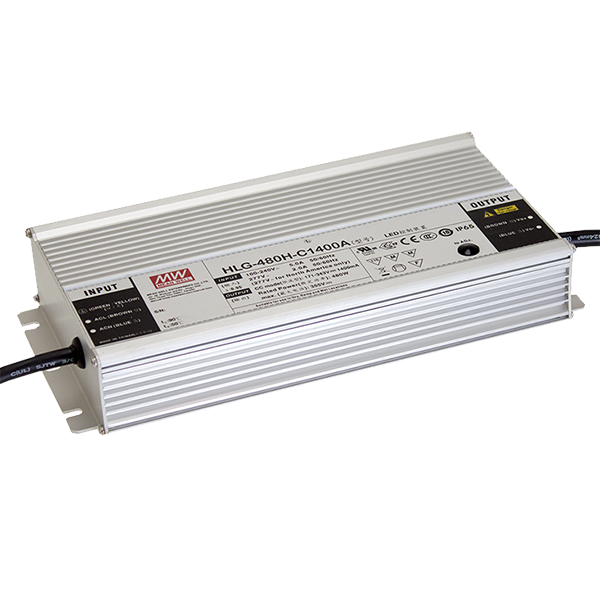
If you are planning for higher outputs of over 320W, the HLG series is usually the right choice, as these high-end devices offer the best efficiency and output of up to 600W.
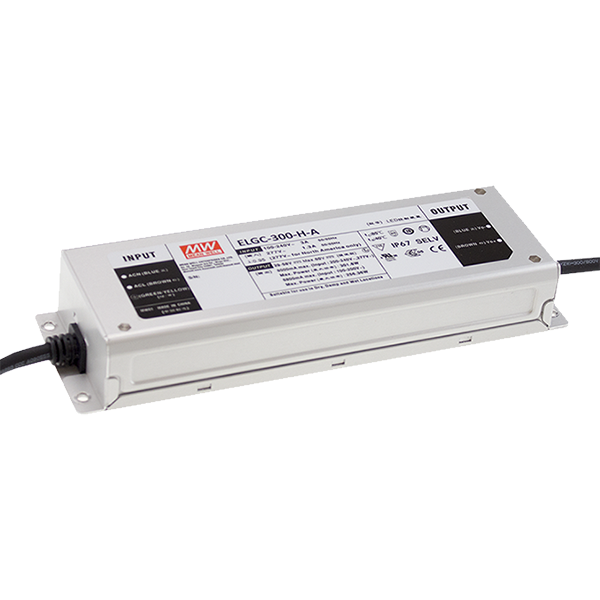
The ELG series has a simpler housing and is very inexpensive. This series is based on the traditional constant current or constant voltage principle.
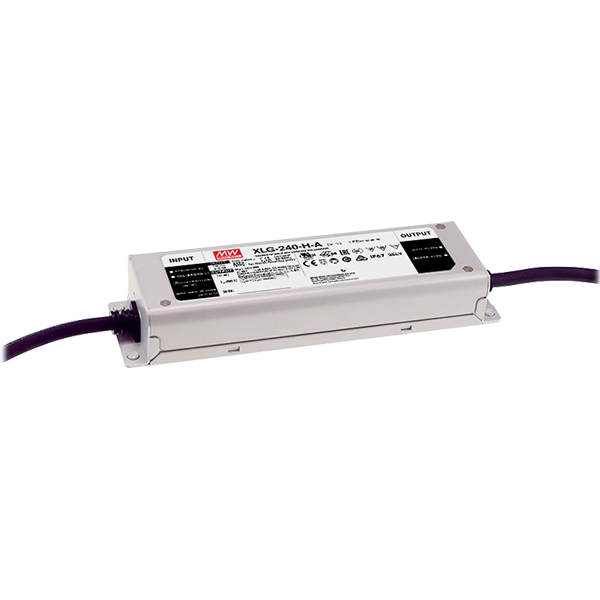
XLG drivers can be used flexibly, as the current and voltage can be customised for different applications. The good price-performance ratio and controllability round off the overall package.
Important Note
Please always observe the safety instructions of the power supply manufacturer. Work on live components may only be carried out by qualified personnel.
Series connection is the easiest way to connect LED modules. The (forward) voltages of the LED modules add up. With the FLUXengine the driver must be able to provide n (number of modules) * 20 V .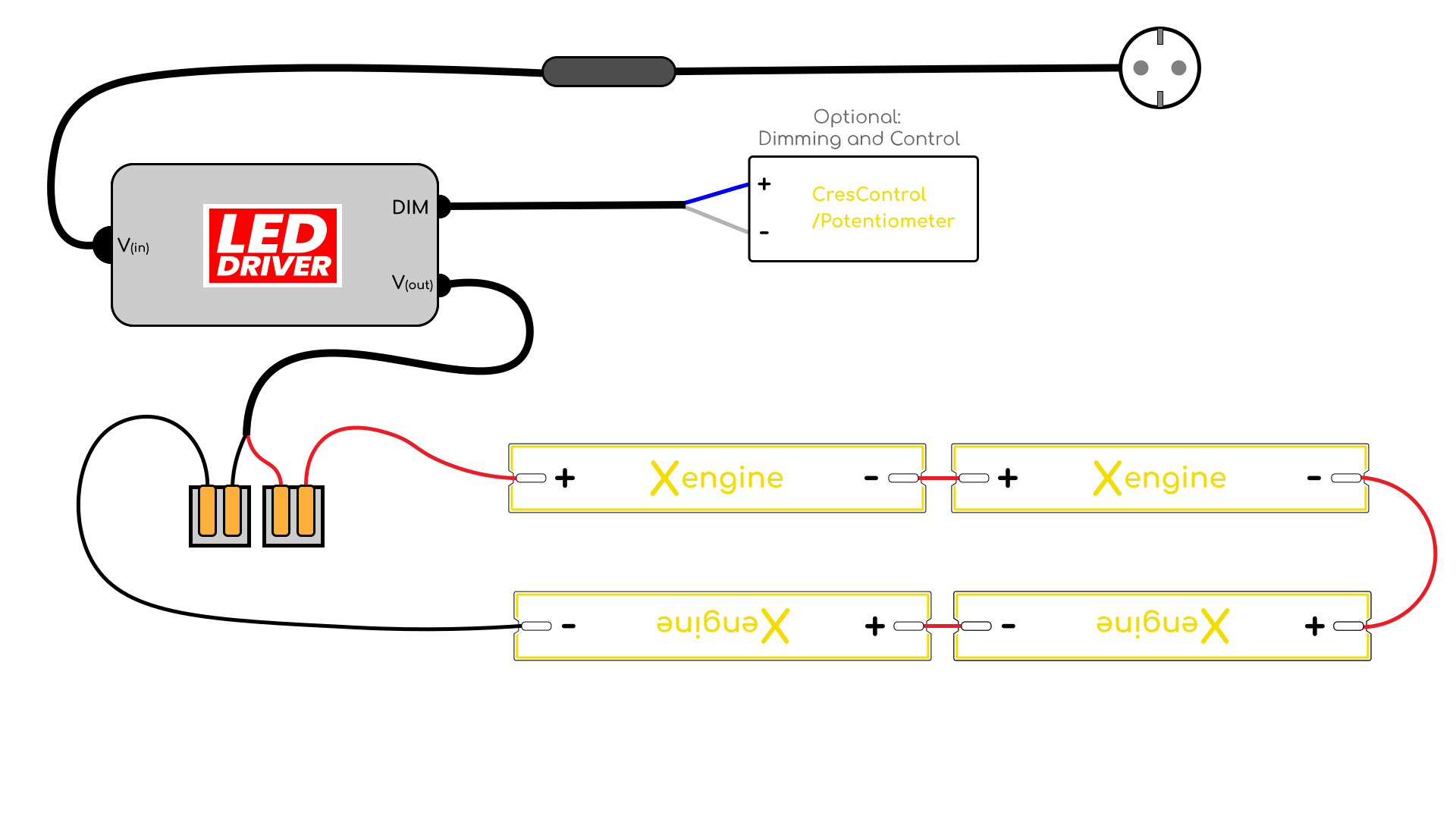
Parallel connection is more practical in some cases, but can also cause problems. We therefore generally recommend series connection. However, a good thing about parallel connection is that lower voltages are applied.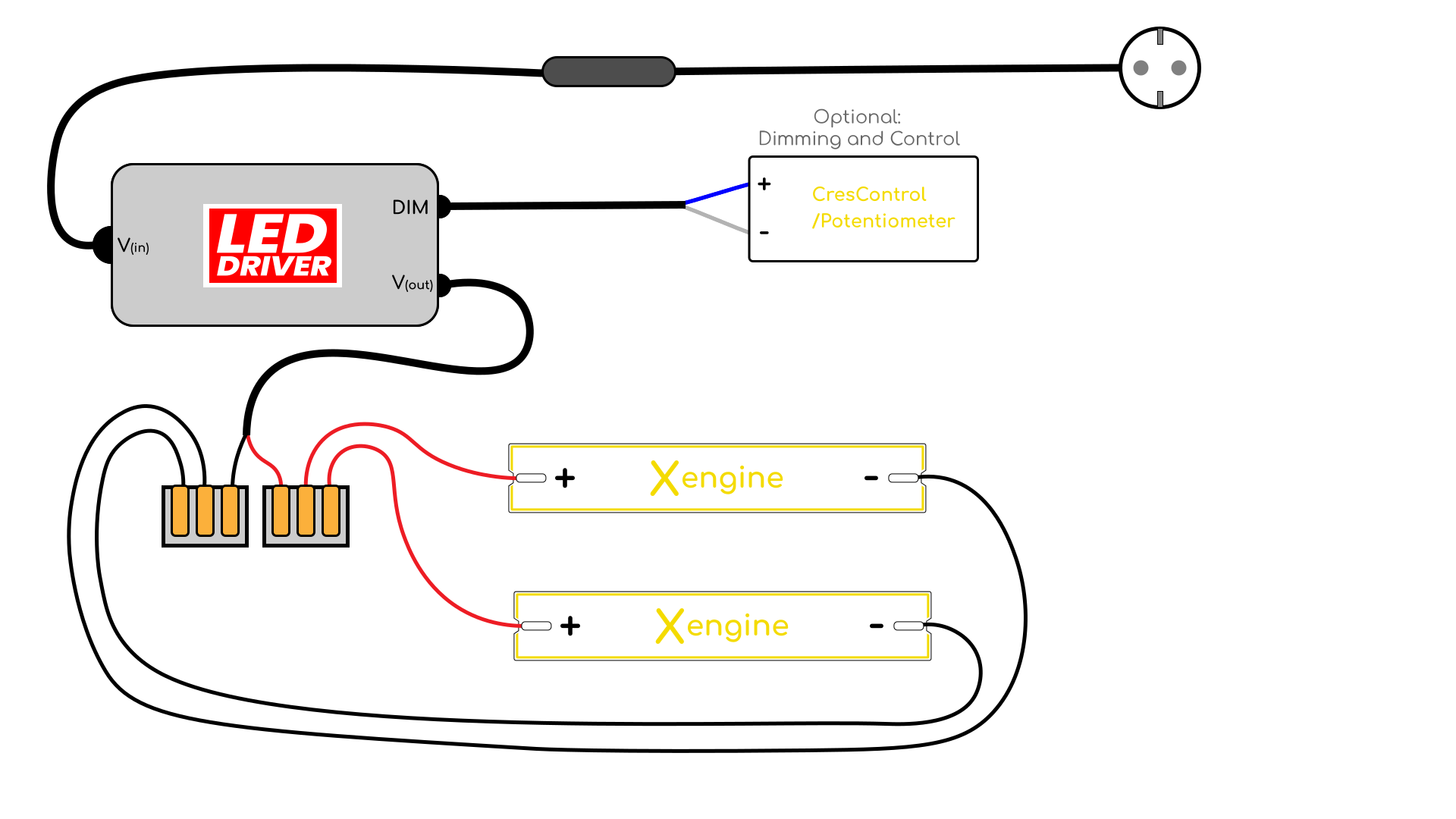
There may be various reasons in favour of a mixture of parallel and series connection. For example, you may want to operate more FLUXengines on one driver, but not enough voltage is available. Then you can open a second "branch" and split the current. The branches must have the same voltage, i.e. be set up exactly the same.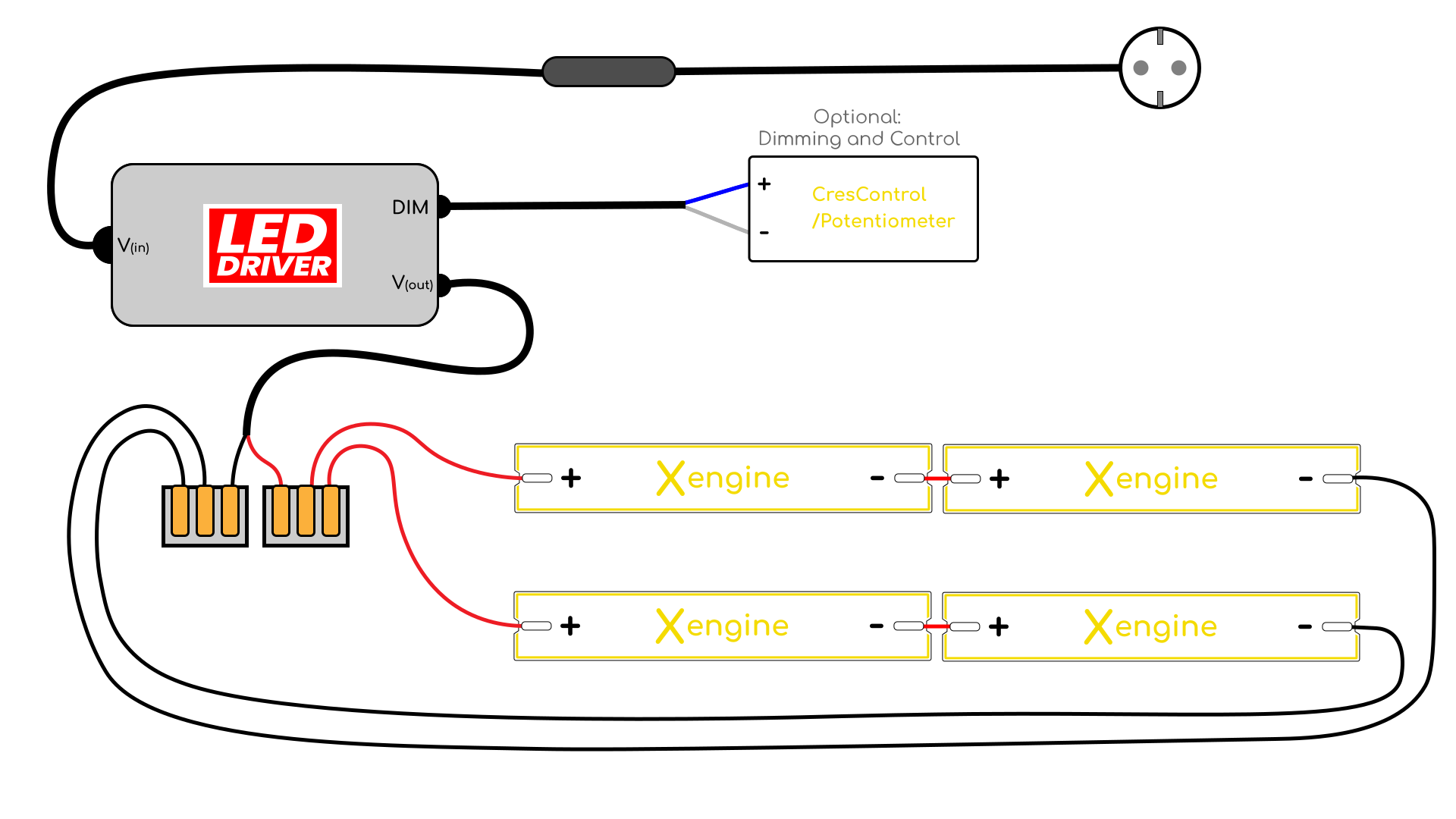
Parallel Wiring
In most cases it makes sense to use different drivers for FLUX modules and APEX modules. The two types have very different limits for the current flow.
By combining series and parallel connection it is possible to implement a mixed setup. However, the ratios in the combined spectrum are then fixed. The advantage of a single constant current source per channel is that you can adjust the light spectrum to the needs of the plant by selective dimming.
The Mean Well power supplies are available in different versions, which differ in their dimmability. With many models the variants are marked with suffix -A, -B or -AB specified in the manufacturer's designation, e.g. XLG-240-M-AB.
Products with the A suffix feature a potentiometer built into the device. This is hidden behind a splash protection cap in the housing. A screwdriver is required to adjust the current or voltage. The control range of the A models is limited to 50-100% of the maximum current. Due to these limitations, this is not actually a dimming function for frequent operation - rather it is intended to limit the current as required.
The MEAN WELL power supplies with B-suffix have a second pair of wires at the output marked DIM+ and DIM-. There are three ways to obtain a dimming function.
The advantage of the B-version is not only that the dimmer can be placed anywhere and the operation is much more comfortable. But also the control range is considerably larger. The LED driver can usually be controlled from 0-100% with external dimmers, i.e. "dim-to-off", so that there is only a low standby power consumption.
The name almost suggests it: Drivers with AB suffix have both the internal potentiometer and the wires for external control of the dimming signal. This is the most ideal solution and we therefore always offer this variant when it is available.
Caution when dimming Mean Well drivers
The individual devices are subject to different tolerances. The dimming function may be used to set currents that exceed the specifications.
To ensure the operational safety and service life of all components, the set values must be measured and compared with the specifications (see data sheets).
Instead of using professional measuring tools, the maximum current can also be set with a "consumption meter".
The LED driver can be mounted on the frame or heatsink or can be placed elsewhere. To keep the grow environment cool, it is recommended to place the driver e.g. outside the tent.
If you want to connect the driver to the frame, you should thermally decouple it. We include plastic washers with our kits that make it easy to create a small gap between the driver and the heatsink to minimize heat transfer.
The good thing about in-house solutions and DIY LED projects is that you can adapt the lamp to your individual ideas. If required, we can supply longer wire leads so that the driver can be placed away from the mounting environment and no additional heat is introduced into the box. Just write in the comment of your order how many meters you need extra. We will try to meet your request.














 Deutsch Deutsch
  English (UK)
 Français
 Español
 Italiano
 Nederlands
 Polski